
Howard University Computer Science Students Win 2025 ACM Tapia Conference First Place Prizes
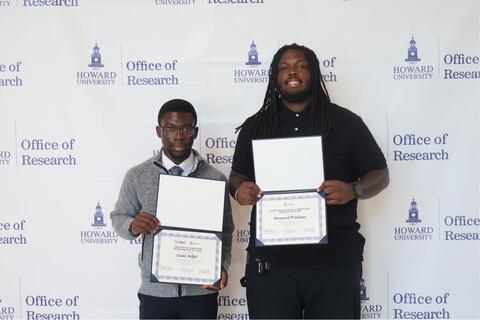
Issac Adjei, Howard University computer science senior, and Howard Prioleau, Howard University computer science Ph.D. student, won first place in student research competitions at the 2025 Association for Computing Machinery (ACM) Richard Tapia Conference. Saurav Aryal, Ph.D., Howard University College of Engineering and Architecture (CEA) senior researcher, served as advisor for the CEA students.
The annual conference provides a forum for undergraduate and graduate students to present their latest research to expert judges and other conference participants.
Adjei won first place in the undergraduate Tapia Student Poster Competition for his work on Improving Machine Translation with Context-Aware Entity-Only Pre-Translations using GPT-4o.
In addition to the Tapia Student Poster Competition, the conference also hosts the ACM Student Research Competition to which select student researchers advance to a second round to showcase their research in brief presentations to a panel of judges.
Prioleau advanced to the second round winning first place in the graduate ACM Student Research Competition for his work on AfriMamba: How State Space Machines Can Help African Language Identification.
Winners receive monetary prizes and qualify for the ACM Student Research Competition Grand Finals.
Aryal is director of the Artificial Intelligence for Positive Change Lab (AI4PC) and a senior researcher at the Institute for Human Centered AI at Howard University, a center led and directed by Howard University computer science associate professor Gloria Washington, Ph.D.
Other computer science student participants included Blayne Montaque, Mildness Akomoize, and Saujanya Thapaliya, who received travel scholarships to attend TAPIA. Akomoize and Thapaliya also presented posters from their work with the AI4PC Lab.